One Student. One of the Best Sessions I’ve Ever Had.

Discussing different light sources and qualities.


The people who show up are the ones who chose to be there. That changes everything.

The difference between teaching at the university and running a workshop is vast.

Standing in front of 30 to 40 students sounds impressive — until you realize many of them are only there because they had to be. The energy is different. And the weight of having to quantify someone’s passion with a grade, knowing it can shape their future — that never sat right with me.

Workshops are a different world entirely.

The people who show up are the ones who chose to be there. They come with fire, curiosity, and a genuine hunger to learn. That’s when teaching feels less like a job and more like a calling.


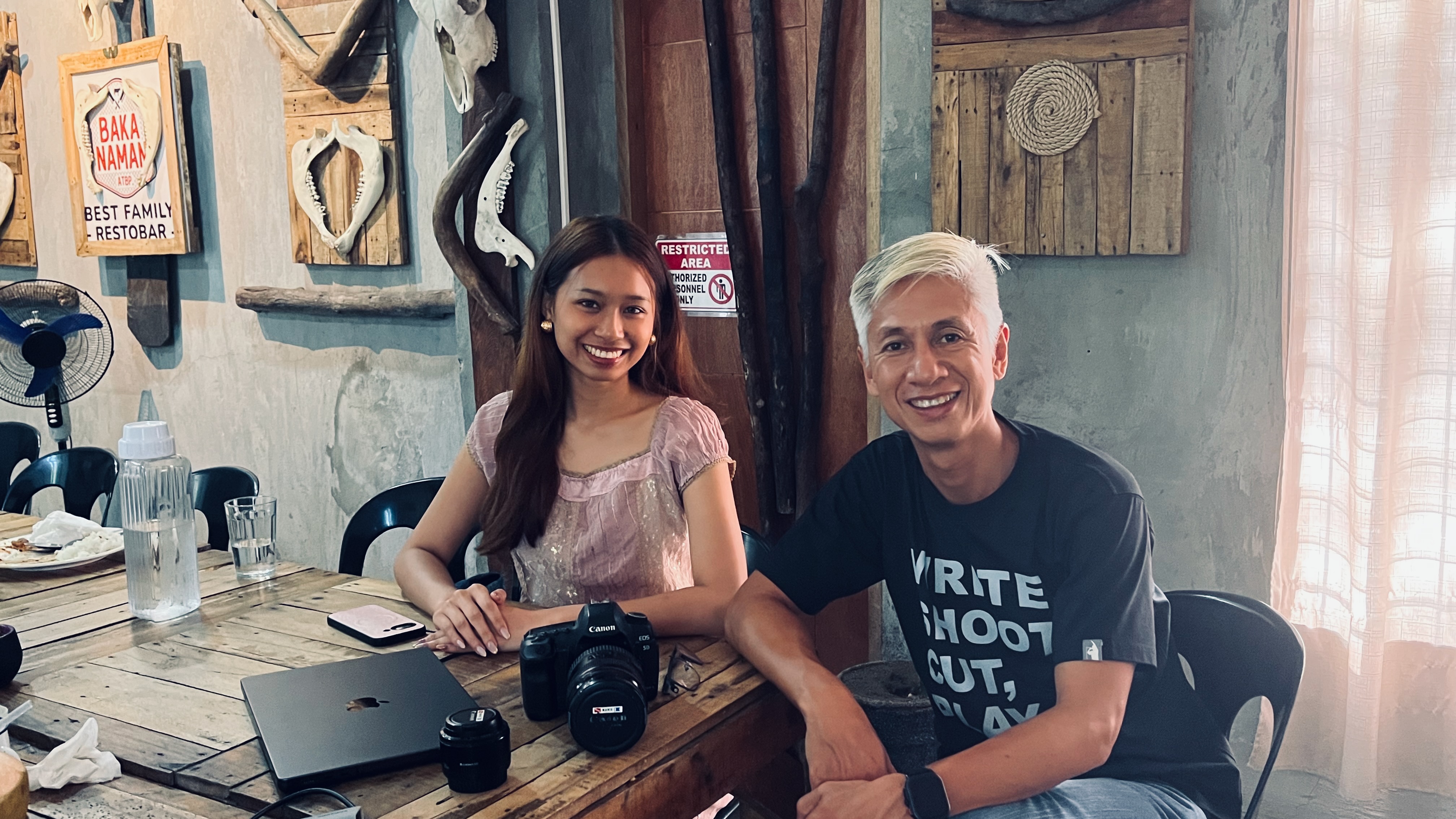
Yesterday, only one student came to the Film Talk.

And it was one of the most rewarding sessions I’ve had.

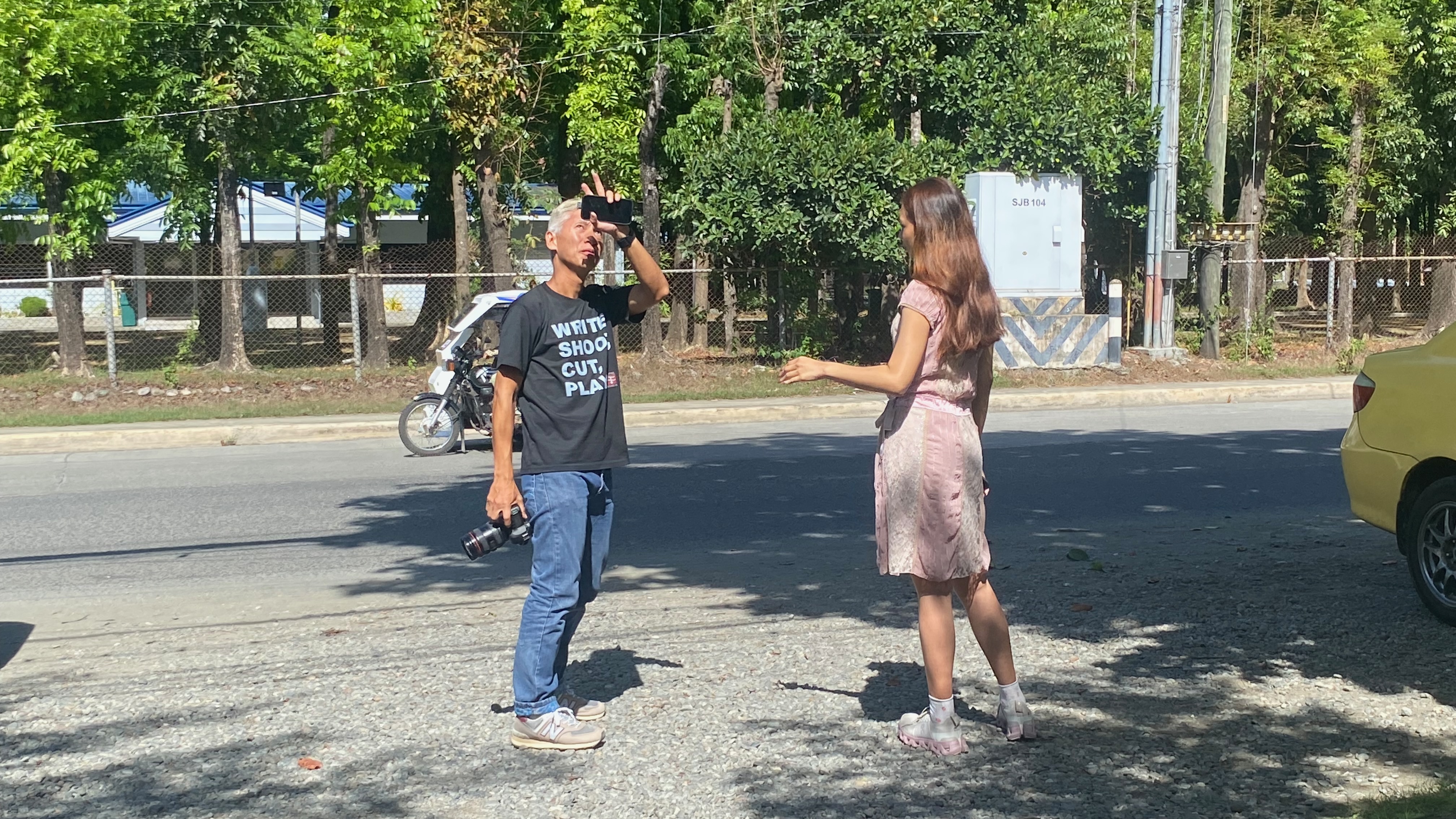
We went deep into cinematography — light, lenses, framing, angles, and how filmmakers craft the illusion of reality in every frame. We stepped outside, read the daylight, studied shadows, and talked about how a scene shot at night can feel like high noon.

It wasn’t just a lesson. It was a conversation between two people who love the craft of storytelling.

And after the workshop, we kept talking — about books, mentors, self-development, and the journeys that shape us. Those moments reminded me why I do this.

One student or twenty, the purpose is the same.

I’ve always believed in quality over quantity. Yesterday proved it again.

— Toto Manie | Filmmaker. Race Director. Storyteller.
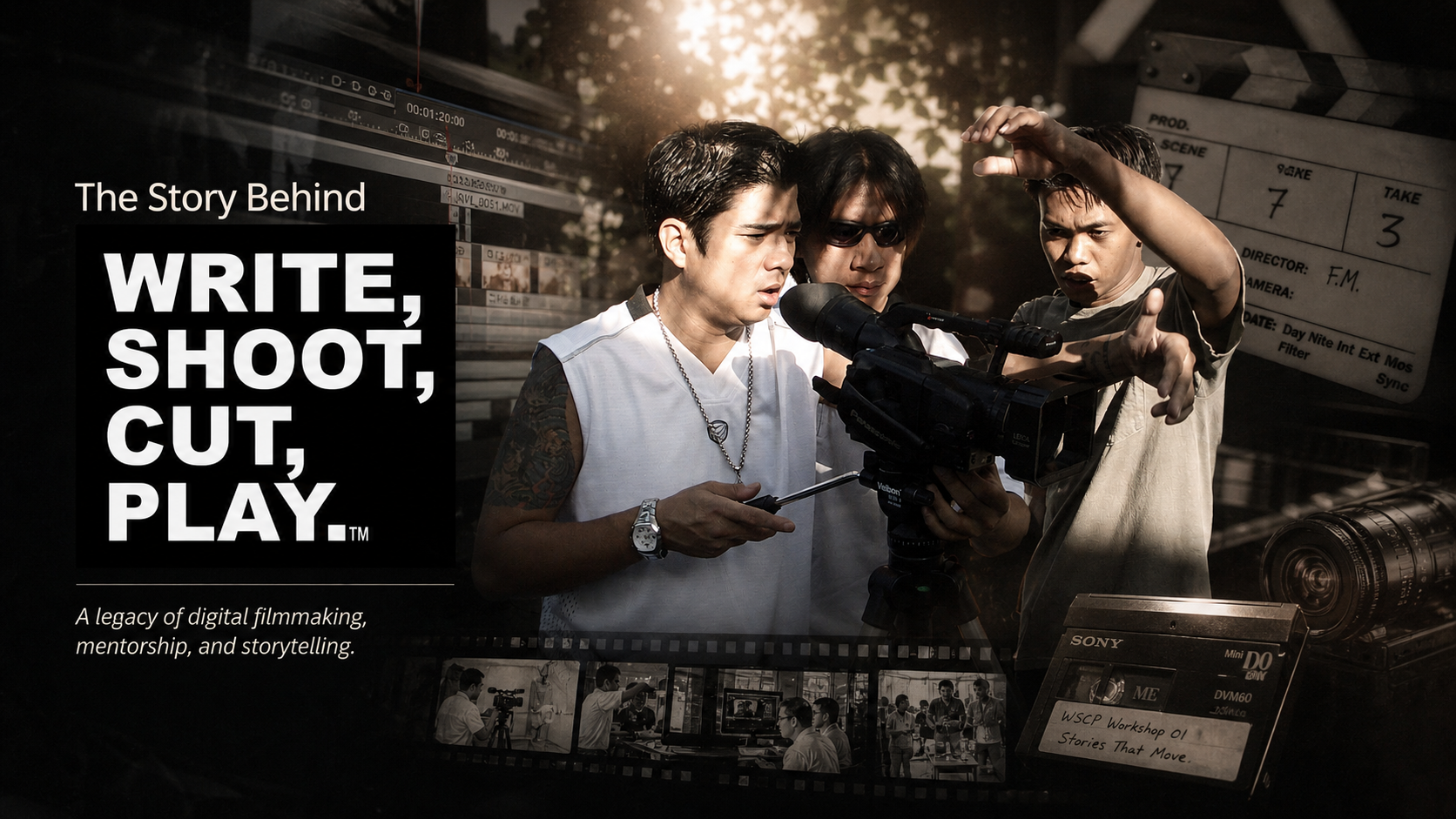
The Story Behind WRITE, SHOOT, CUT, PLAY™

Digital filmmaking as we know it began taking shape in the late 1990s, when Digital 8 and Mini DV formats started gaining ground. Cameras became smaller, more accessible, and non-linear editing software finally reached the consumer market. But “accessible” was relative — I still remember spending ₱119,000 just to build my first editing machine, running an ADVC100 capture card and AVID Express DV. It wasn’t cheap, but it was a start.

Then in 2004, something bigger happened. I met the late, great Francis Magalona.

Together, we built Filipino Pictures, Inc. — a small but purposeful production house that handled our own personal projects and collaborated with student filmmakers from various universities. It was humble by design, but it was ours.

The mid-2000s, I believe, marked the golden era of digital filmmaking. When Panasonic released the DVX100 — the first consumer camera capable of shooting in 24p — it changed everything. Suddenly, content was sprouting everywhere. Aspiring filmmakers had a real tool in their hands, and the creative floodgates opened.

But with that surge came a pattern I kept noticing: brilliant concepts, powerful stories — shot poorly. Not because the ideas weren’t there. But because the craft hadn’t caught up with the passion. Everyone wanted to make films, and honestly, that energy was unstoppable.

Francis and I talked about this a lot, with other filmmaker closest to our circle. We all saw what was coming — a generation of storytellers who needed a foundation, not gatekeeping. We asked ourselves: if we can’t stop people from making films, why not teach them how to do it right?

That question became the seed of WRITE, SHOOT, CUT, PLAY™.

We pulled together a team of our most passionate friends — all working, established filmmakers — each a master in their own lane. Together, we mentored the very first WSCP batch in the Summer of 2008. The rest, as they say, is history.


If you’re part of WSCP — whether as a student, a mentor, or a sponsor — know that you are part of something that matters. The name WRITE, SHOOT, CUT, PLAY™ itself was penned by Francis Magalona. That alone tells you what this is.

You’re not just learning filmmaking. You’re carrying a legacy.

Visit WSCP Facebook Page at: https://www.facebook.com/writeshootcutplay