
By Toto Manie | Health & Wellness | May 2026
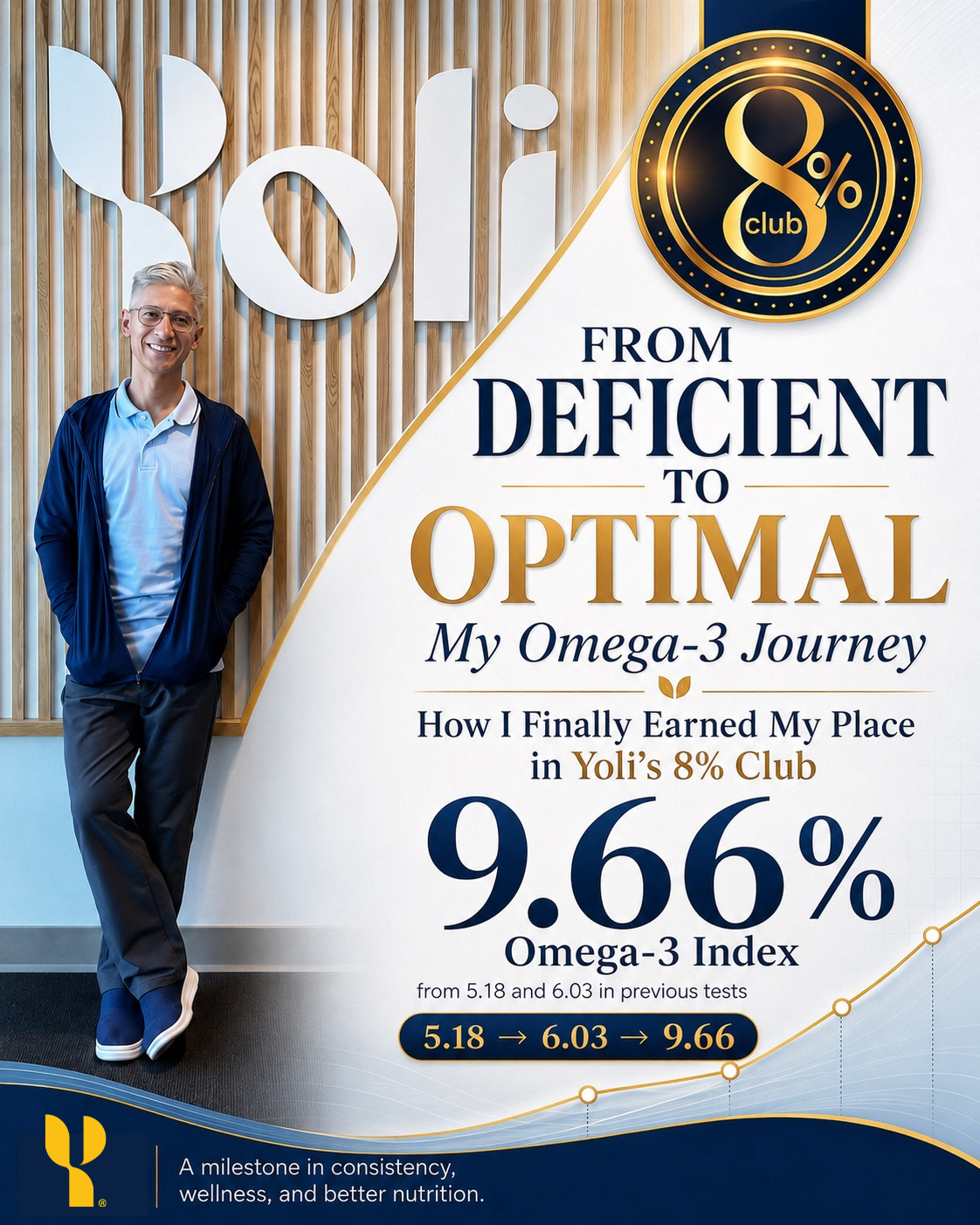
I want to start with a question that most people never ask about themselves:
Do you actually know your Omega-3 level right now?
Not a guess. Not an assumption based on the fish you ate last week or the supplement you take “sometimes.” An actual, tested, verified number.
I didn’t know mine either—until I got tested in 2024. And what I found out changed how I think about my health.
Where This Story Begins

In October 2024, I attended the Yoli annual conference in Utah and was among the first wave of people to try the newly launched Yoli Vital Omegas+ Starter Kit—complete with an Omega-3 Index test powered by OmegaQuant Analytics, one of the leading fatty acid testing laboratories in the world. OmegaQuant is an independent, CLIA-certified lab based in Sioux Falls, South Dakota, founded by Dr. William S. Harris, PhD—a professor at the Sanford School of Medicine, University of South Dakota, President of the Fatty Acid Research Institute, and one of the world’s foremost authorities on Omega-3 research.
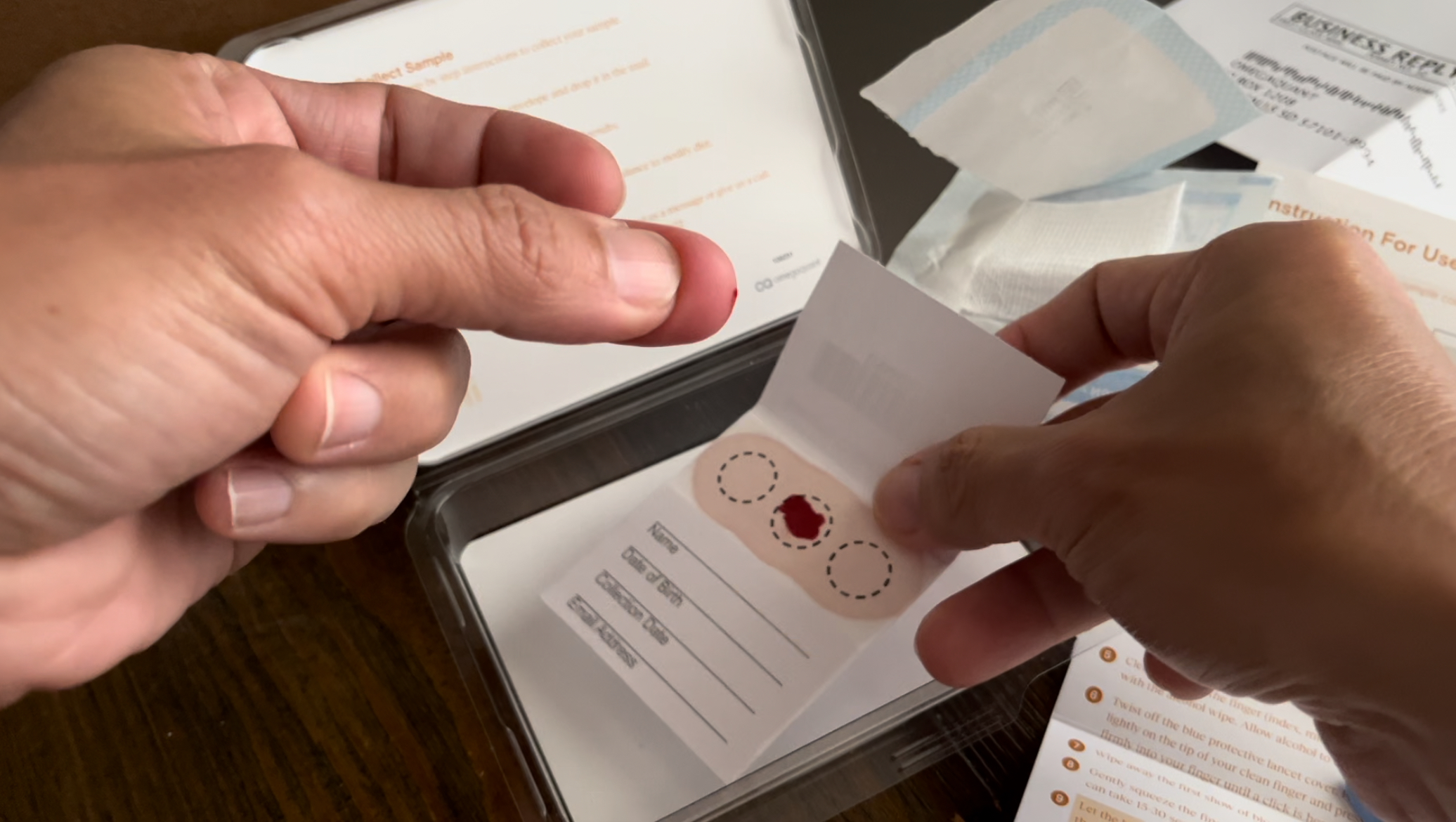
I was also the first Yoli independent distributor from the Philippines to get tested when this program launched. I didn’t know what to expect. I’d been active, eating reasonably well, and taking care of my body as an ultra-distance runner and wellness advocate.
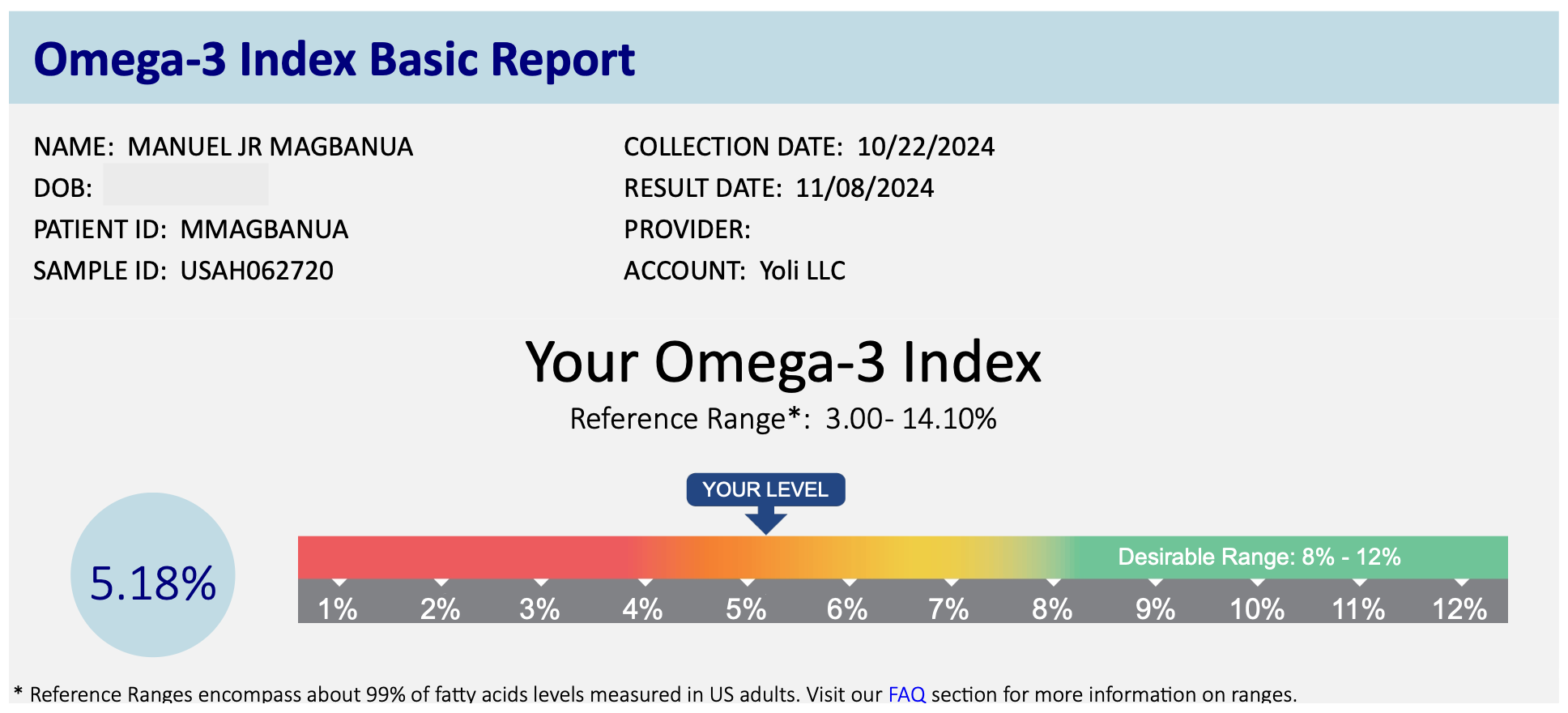
My result: 5.18%
The optimal range is 8–12%. Anything below 8% is considered deficient.
I was below it. Way below it.
(Full blog post about that first test: Read here)
What Happened Next—And Where I Dropped the Ball
I went home to the Philippines, continued the 4-month Yoli Vital Omegas+ supplementation protocol—and saw it through. But here’s the honest part: when the bundle ran out, I stopped taking it consistently. Life got busy. And since Omega-3 Index testing wasn’t yet available in the Philippines at the time, I had no way to measure whether the supplementation had made a difference.
No test. No data. No accountability.
That’s the problem with “I think I’m okay.” You end up guessing.
Test #2: September 2025 — Testing Comes to the Philippines
When Omega-3 Index testing finally became available in the Philippines in 2025, I didn’t wait. I got tested in September.
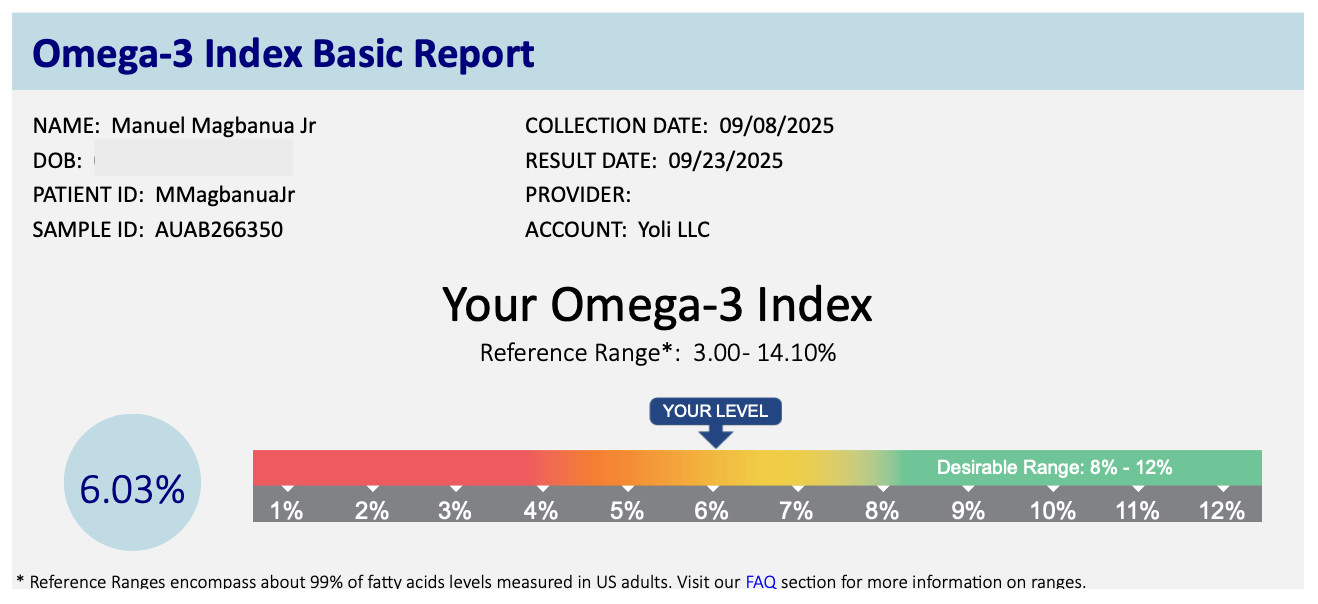
Result: 6.03%
Still below optimal. Still in the deficient range. But at least now I had a number to work with.
It confirmed two things: (1) the supplementation had done something—my level had moved up from 5.18%—but (2) my inconsistency after the first bundle meant I never fully got there. The gains were real, but incomplete.
I made a decision right then: no more gaps. I went back on Yoli Vital Omegas+, this time consistently and without interruption.
Test #3: April 2026 — The One That Amazed Me
Seven months after Test #2, I got tested again.
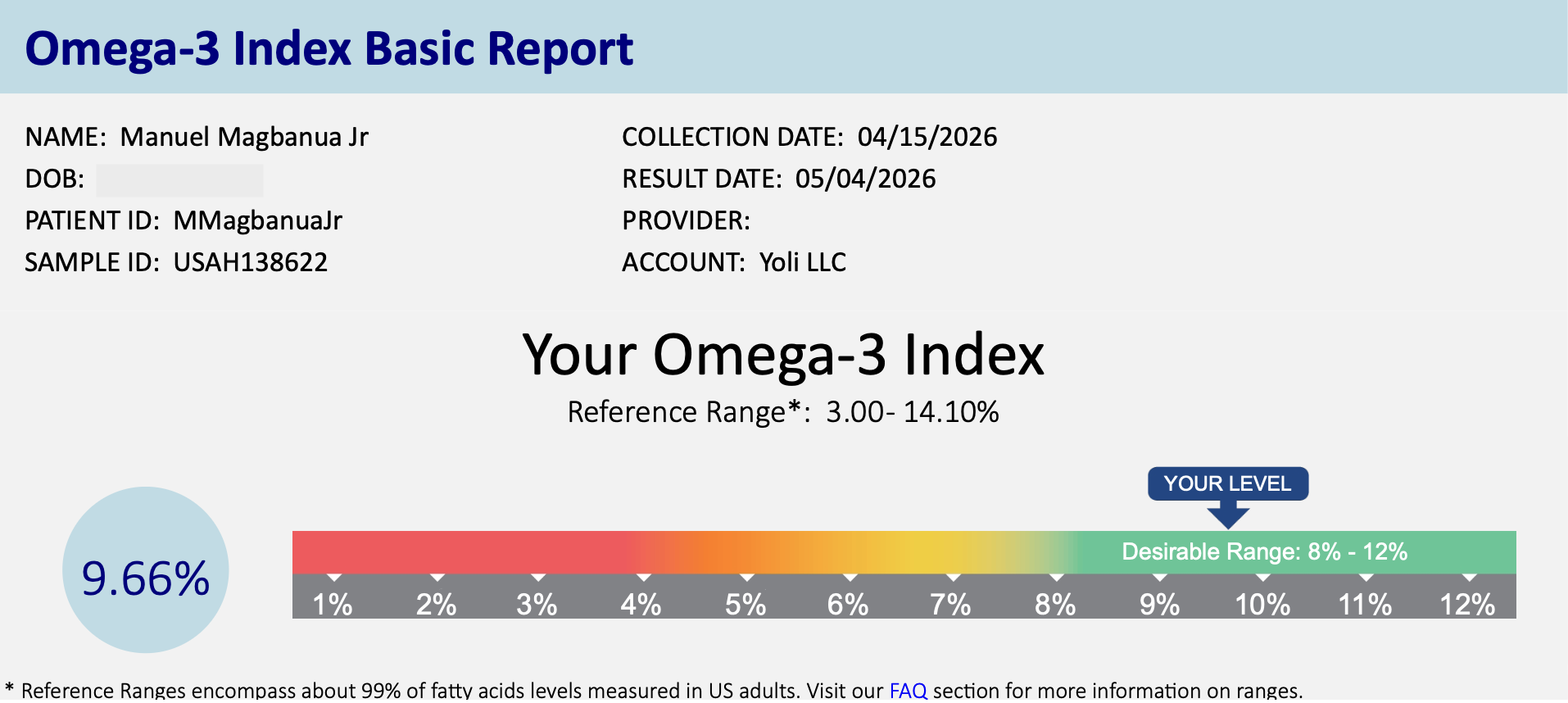
Result: 9.66%
That’s inside the optimal 8–12% range. Not barely—comfortably.
The science backs it up: 60 to 90 days of consistent supplementation is enough time to see a meaningful increase in your Omega-3 Index. I knew the numbers would move — because this time, I didn’t miss a single day. And they did. From 6.03% to 9.66%. The difference in how I feel — in recovery, mental clarity, and energy during training — tracks exactly with what the research says should happen.
Why This Matters More Than You Probably Think
Omega-3 is the most studied supplement in the world, with thousands of peer-reviewed studies and decades of clinical research behind it. And yet most people—including most people who already take it—are still deficient.
Here’s what the science, presented by Dr. William S. Harris and OmegaQuant, says:
The deficiency problem is massive.
Over 90% of the U.S. population is Omega-3 deficient. In Southeast Asia—including the Philippines—while formal population-wide data is limited, the pattern mirrors other countries where seafood consumption is lower or inconsistent (particularly in urban areas). The global Omega-3 Index map shows most of the world sitting in the orange-to-red range: deficient.
Taking a supplement isn’t enough.
This one surprised me. About 70% of people who are already taking an Omega-3 supplement are still testing deficient. Why? Because not all Omega-3 products are created equal. Absorption, formulation, dosage, and bioavailability matter enormously. You can swallow a capsule every day and still be nowhere near optimal—and have no idea, because you never tested.
The Omega-3 Index is a better predictor of fatal heart disease risk than cholesterol.
This is the finding that stops people cold when I share it. A meta-analysis of 10 studies involving over 27,000 subjects (Harris WS, et al. Atherosclerosis 2017;262:51–54) found that people with an Omega-3 Index of 8% had a 35% lower risk of fatal coronary heart disease compared to those at 4%. Meanwhile, the Framingham Offspring Study showed that as Omega-3 Index levels rose, the risk of death from any cause dropped significantly—while cholesterol levels, in the same model, showed no statistically significant relationship to that risk. We’ve been watching the wrong number.
The benefits go far beyond your heart.
Research has associated optimal Omega-3 levels (8–12%) with meaningfully lower risk of:
- Cardiovascular disease and fatal coronary heart disease
- Death from any cause (all-cause mortality)
- Dementia and Alzheimer’s disease
- Macular degeneration (eye health)
- Pre-term birth
- Testing positive for COVID-19 and being hospitalized from it
For athletes specifically, adequate Omega-3 levels support joint health, reduce inflammation and muscle soreness, and improve recovery time—all things that matter deeply to anyone training consistently.
Why Yoli Vital Omegas+—And Why OmegaQuant
Two things make this approach different from picking up a random fish oil bottle at the pharmacy.
1. Full-spectrum formula with Vitamin D3.
Yoli Vital Omegas+ is a full-spectrum Omega-3 supplement, meaning it provides the complete range of fatty acids your body needs—not just isolated EPA or DHA. It also includes Vitamin D3, which is important on its own: Vitamin D deficiency is widespread globally, it plays a critical role in immune function, bone health, and mood regulation, and many people—especially in indoor-heavy modern lifestyles—are running low without knowing it. Pairing D3 with Omega-3 in one supplement is a thoughtful combination.
2. Test-based supplementation through OmegaQuant.
Yoli partners with OmegaQuant Analytics (omegaquant.com) to provide a clinically validated Omega-3 Index test—the same lab trusted by Harvard University, Columbia University, the NIH, Duke University, the University of Oxford, the U.S. Army, the U.S. Olympic Team, GSK, AstraZeneca, and major professional sports teams across the NBA, NFL, NHL, and MLB.
OmegaQuant measures whole blood Omega-3 levels using a dried blood spot method (a simple finger prick, no lab visit needed), converting results into a Red Blood Cell (RBC) Omega-3 Index. RBC measurement reflects your Omega-3 status over the past 3–4 months—a much more accurate picture than plasma tests, which can be temporarily inflated by a recent fish meal or supplement dose.
Very few companies in the world offer this kind of integrated test-and-supplement approach. The ability to start with a baseline, supplement with intention, and then retest to verify results is what separates this from guessing.
The Tagline I Keep Coming Back To
Test. Don’t guess.
It sounds simple, but it changes everything. When I had no test, I had no real information. I was making decisions about my health based on assumptions. The moment I had actual data—a number—I had something to work with, something to measure against, something to improve.
That’s true of your Omega-3 level. It’s true of your training. It’s true of most things worth caring about.
My Three Test Results at a Glance
| Date | Omega-3 Index | Status | Notes |
|---|---|---|---|
| October 2024 | 5.18% | ⚠️ Deficient | First test ever. |
| September 2025 | 6.03% | ⚠️ Deficient | Improved, but inconsistent supplementation post-bundle |
| April 2026 | 9.66% | ✅ Optimal | 7 months of consistent Yoli Vital Omegas+ |
Want to Know Your Number?
If you’re in the Philippines and you want to get your Omega-3 Index tested—or if you want to learn more about Yoli Vital Omegas+ and how the test-based supplementation process works—I’d love to walk you through it.
You can reach me directly:
📩 manieandbern.yoli@gmail.com
📱 Facebook
🌐 https://yoli.com/totomanie
Whether you’re an athlete, a parent, a professional pushing hard every day, or someone who just wants to know they’re doing the right thing for their long-term health—this is worth looking into. Get a baseline. Know your number. Then do something about it.
TEST. DON’T GUESS!
Disclaimer: I am an independent Yoli distributor and a wellness advocate, not a medical professional. The information shared in this post is based on my personal experience and publicly available research. The studies referenced are real and cited from peer-reviewed publications, but individual results vary. This content is not intended to diagnose, treat, cure, or prevent any disease. Please consult a qualified healthcare provider before making changes to your supplement routine or health plan. Results shared are my own and are not guaranteed.
Research references: Harris WS and von Schacky C. Prev Med 2004;39:212–220 | Harris WS, et al. Atherosclerosis 2017;262:51–54 | Harris WS, et al. J Clin Lipidol 2018;12:718–727 | McBurney, et al. Am J Clin Nutr 2021;114:1447–1454 | Harris WS, et al. for the FORCE Consortium. Nature Comm (2021) 12:2329 | Harris WS, et al. AJCN 2023;117:357–363 | Schaefer et al. Arch Neurol 2006;63:1–6 | Schuchardt JP, et al. Prog Lipid Res 95 (2024) 101286



 TOTO MANIE