I’m 50 years old, and I just finished a 50K mountain ultra on less than 40 km of running a week. For most of my running life, I would’ve told you that was way too hard. My training philosophy fit in one sentence: the more kilometers and elevation I bank, the more confident I am at the start line.
And actually? It worked. I have finished every race I started. Some of those finishes were strong. Some were a long, quiet negotiation with the cutoff clock.
UTCP 50K Solibao was the first time I followed a proper, structured training plan from day one to race day, built on Coach Andy DuBois’s principles. Fifty-four days. No guesswork. And it changed how I think about training, maybe for good.
This isn’t a race report (I wrote that one here). This is about the concept of training: what I used to do, what I did this time, and why I believe the second way is the better path for runners of any age. Especially for those of us with families, businesses, and bodies that no longer recover like they did at 25.

The old way: volume is king
Here’s how I used to train. No phases. No real plan. Just a simple rule that I followed with full conviction:
- Approximately 10 km a day, Monday to Friday. Some strength workouts or cross-training mixed in whenever I felt like it, or when my schedule or circumstances kept me from running.
- Back-to-back long runs every weekend.
- No proper taper. I’d ease off a little before race day, mostly because life got busy, not because I planned it.
The logic was simple: if I’ve already covered the distance and the climbing in training, race day can’t scare me. Kilometers were my insurance policy.

That mindset carried me to every finish line I’ve ever crossed. But looking back, it also explains why some of those finishes were strong and others were a desperate race against the cutoffs. I was building confidence, not necessarily fitness. And I was arriving at start lines already tired from carrying all that “insurance.”
I went back to Strava to see if my memory matched the record. The best example is my build for UTMB 2018 in Chamonix, France, my biggest race. That build ran for months, so I wasn’t starting from zero when the final stretch began. But in the last eight weeks before race week alone, I logged nine runs over 20 km, including back-to-back weekends like 31.5 km Saturday + 28.7 km Sunday, and a 48 km training run with 2,548 m of climbing. My last 33 km long run was just 13 days before the start. That was my idea of a taper.

I finished UTMB in 45:59:25, 1,700th of 1,778 finishers, about half an hour inside the 46.5-hour cutoff. I’m proud of that finish. But it’s also the old way in one picture: a lot of kilometers in the tank, and a body that was already tired before the gun went off.
To be fair to the old way: 2018 was my strongest year. All that UTMB-level mileage made me fit, and it showed. That March, I ran the Cordillera Mountain Ultra 50K in 9:09:07, in the same mountains as UTCP. This October, I finished UTCP 50K in 10:21:24, about 72 minutes slower, on a different course.


Ultra-Trail du Mont-Blanc (UTMB) 2018
But look at what’s behind those numbers. In 2018, I was in my early forties and running 60 to 90 km weeks. In 2026, at 50, I averaged 38 km a week for just 54 days. I got within about an hour of my best year on less than half the volume, with a body that no longer recovers like it used to. That’s not a step backward. That’s what training smarter looks like as we get older.
Now, some of you might say: “That’s not a fair comparison. UTMB is 171 km. Of course you trained more for it.” That’s right, and that’s exactly why I’m not comparing the numbers. A 100-miler needs more volume than a 50K. The point is the approach. The old way was “more is better,” no matter the race. This time it was “less, but with purpose.”
And I didn’t start this block anywhere near my 2018 fitness. After the Hardcore Hundred Miles in 2019, I stepped away from ultras for years. Between then and this year, my only races were a 21 km trail run in 2021 and a mountain marathon in 2023. Then came HK100’s 54 km race in January, and from then until September, I barely ran.
So these 54 days weren’t sharpening an ultra-fit body. They were rebuilding one almost from scratch, after nearly seven years away from serious ultra training. That’s why the plan opened with a phase called Restart & Rebuild.
The new way: build, absorb, build, taper
This time I had just 54 days. Not ideal. But the plan didn’t try to cram in everything. It did something I had never done before: it moved in phases.
- Restart & Rebuild — easy runs, short hills, short long runs. Wake the body up without breaking it.
- Race-Specific Build — hill repeats, tempo, intervals, and long trail runs with real climbing.
- Absorb & Recover — a lighter week on purpose, so the body could actually turn the work into fitness.
- Build again — the big week, including a 30.8 km race-simulation run with over 1,000 m of gain.
- Taper — cut the volume, keep a little sharpness, arrive fresh.

Look at that chart again. My peak week in this program barely passed what I used to run on weekdays alone. Most weeks were well under it. And yet I arrived at the start line of a 50K with 2,800 m of climbing feeling fresher than I ever had.
The secret wasn’t the volume. It was the rhythm: stress, recover, adapt, repeat.


Every run had a job.
By the numbers
I logged every session in Notion and synced every run from Strava, so I don’t have to rely on memory or feelings here. This is what 54 days of structure actually looked like.
| My old way | This plan (54 days) | |
|---|---|---|
| Weekday running | Approximately 10 km every day | 5–8 km, each with a purpose |
| Weekly volume | ~64 km/week logged (UTMB 2018 build), 89 km peak | 37.9 km/week average, 55.4 km peak |
| Weekends | Back-to-back long runs (e.g., 31.5 km + 28.7 km) | One long run + rest or a walk |
| Rest days | Rarely | 20 of 53 days |
| Workout variety | Mostly the same run, repeated | Easy, hills, tempo, intervals, long |
| Recovery week | None | One full “absorb” week mid-block |
| Taper | Not planned (33 km long run 13 days out) | ~2 weeks, by design |
| Longest training run | 48 km, 2,548 m gain | 30.8 km, 1,034 m gain |
| Total before race day | 515 km in the 8 weeks before UTMB race week | 270 km, 7,054 m gain, 33 runs |

That bar is the part that surprised me most. Almost 40% of my training days had no running at all. In the old days, I would’ve called that being lazy. Now I understand it was where the fitness actually got built.
Race day: a decent finish, and an honest last third
I’ll be honest: I stood at that start line with some doubt. This was my first time training this way, and fewer kilometers went against everything I had believed for years. I never doubted that I would finish. I always believe I will. But I had real reservations about how my body and legs would carry me to the finish line. Would less really be enough?
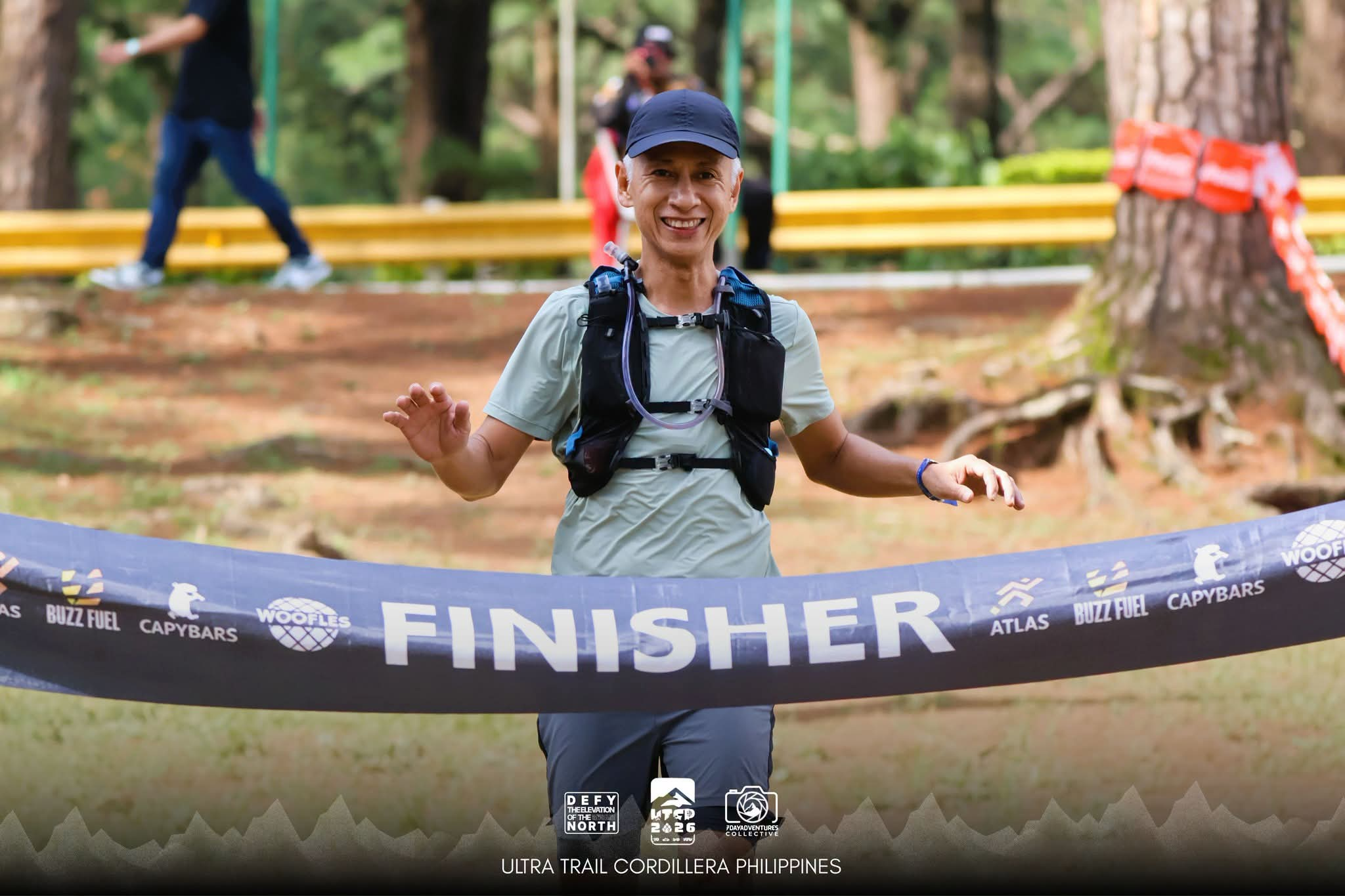
On October 24, at 50 years old, I crossed the finish line of UTCP 50K Solibao in 10:21:24, 39th overall of 149 starters and 33rd among the men. I was aiming for sub-10, and I didn’t get it. But I finished strong enough to be proud of, on a course with 2,800 m of climbing, off a 54-day build.

Here’s what still amazes me:

In the old days, this would’ve made me nervous. How can you finish 50K if you never ran 50K? But the body doesn’t need a full rehearsal to get to the finish line. It needs to be prepared and fresh, and it was.
Now the honest part. From around km 38, I struggled. My legs got heavy, my appetite disappeared, and the last third became a grind. It wasn’t the first time. I’ve faded late in some past races too.
This time, I know where it came from:
- Not enough long runs. In this block I had only two runs over 20 km. In my UTMB 2018 build, I had nine. The short timeline meant there was no room for more, and my legs felt it in the last 15 km.
- Going out too hot. Pushing the early climbs and bombing the downhills felt great in the first half. I paid for that speed in the second.
But here’s what matters most to me: even with those gaps, I still finished in 10:21. On a short build, on fewer kilometers, at 50. Structure got me to the finish line strong enough to be proud of. Fix the long runs and the early pacing, and that last third becomes a lot kinder.
And that’s the exciting part. If 54 days of structure could take me this far, imagine what more training time and an improved program can do. More long runs, smarter pacing, a full build instead of a rushed one. I don’t believe 50 is where we start slowing down. I believe we can still get stronger, and that’s exactly what I’m working toward now, one planned block at a time.
What structure taught me
1. Less volume, more intention. We don’t need all the kilometers and elevation we think we need. We need a proper build-up, proper phases, and a proper taper. Every run had a job: recover, climb, sharpen, or go long. No “junk miles” just to feel productive.
2. Recovery is training. This program was built around recovery more than anything else. Rest days, the absorb week, and the taper weren’t breaks from the work. They were where the work turned into fitness. Your body gets stronger after the workout, not during it.
3. It was less stressful. I didn’t have to drag myself out the door to force another 10K on tired legs, or stress about missing a back-to-back weekend. The plan told me what to do, and most days it was less than my ego wanted. That freed up energy for family, work, and life.
4. It was never boring. Easy runs, intervals, tempo, fartlek, hill repeats, long trail days, yoga and mountain biking. The variety kept me curious, and as a lifelong learner, that’s what keeps me consistent.
5. Confidence can come from preparation, not just accumulation. I used to feel ready because of how much I’d run. This time I felt ready because I trusted the process, and I could see it working in my log.
If you’re 40 and up
If you’re 40 or older, with a job, a family, maybe a business or two, and a race you’ve been dreaming about, this part is for you.
You probably don’t have time for the 60 to 90 km weeks I used to chase. Good news: you may not need them. At 50, in 54 days, averaging under 40 km a week of running, I finished a mountain 50K in a decent time. Not because I’m special, but because the plan respected three things our bodies need more of as we get older:
- Recovery. We don’t bounce back like we did at 25. A plan that builds rest in keeps us healthy enough to keep showing up.
- Variety. Hills and strength protect the knees, hips, and back. Speed work keeps the engine from going stale.
- Patience. Build, absorb, build, taper. Fitness comes in waves, not in one straight line of grinding.
If you want to start, here’s the simple version of what I’d tell a friend:
- Pick your race and count the weeks. Even 7–8 weeks is enough to prepare well if you already have a base.
- Follow a plan from a real coach. Mine was built on Coach Andy DuBois’s principles. Structure beats guesswork.
- Make most runs easy. If you can’t talk, you’re going too hard.
- Take the rest days seriously. They’re part of the plan, not a sign of weakness.
- Taper, really taper. Arrive at the start line hungry, not tired.
- Don’t skimp on long runs. Less volume overall is fine, but give yourself enough long days to prepare your legs for the last third.
- Start slower than you want to. The first half feels easy. The second half sends the bill.
- Get checked. At our age, a medical check-up before a big ultra is smart, not optional.
You don’t need to run more to go further. You need to train smarter, recover better, and trust the process.
If I can do this at 50, so can you. And with more time and a better plan, we can both get even stronger.


That’s what Inspire To Move is all about: proving that it’s never too late to move, to build, and to finish something hard.
Want the full 54-day plan and my training log? They’re public on Notion, and the race story is here.
Train along with me
This is just the start. I’m building toward my next race now, and I’m sharing every run, every lesson, and every mistake along the way.
- Follow my training on Strava to see the actual workouts, not just the highlights.
- Join me on social: Facebook · Instagram · Threads · YouTube · TikTok · X · LinkedIn
- Not subscribed to Field Notes yet? Hit subscribe and get the next story straight to your inbox.
Let’s keep moving. ????
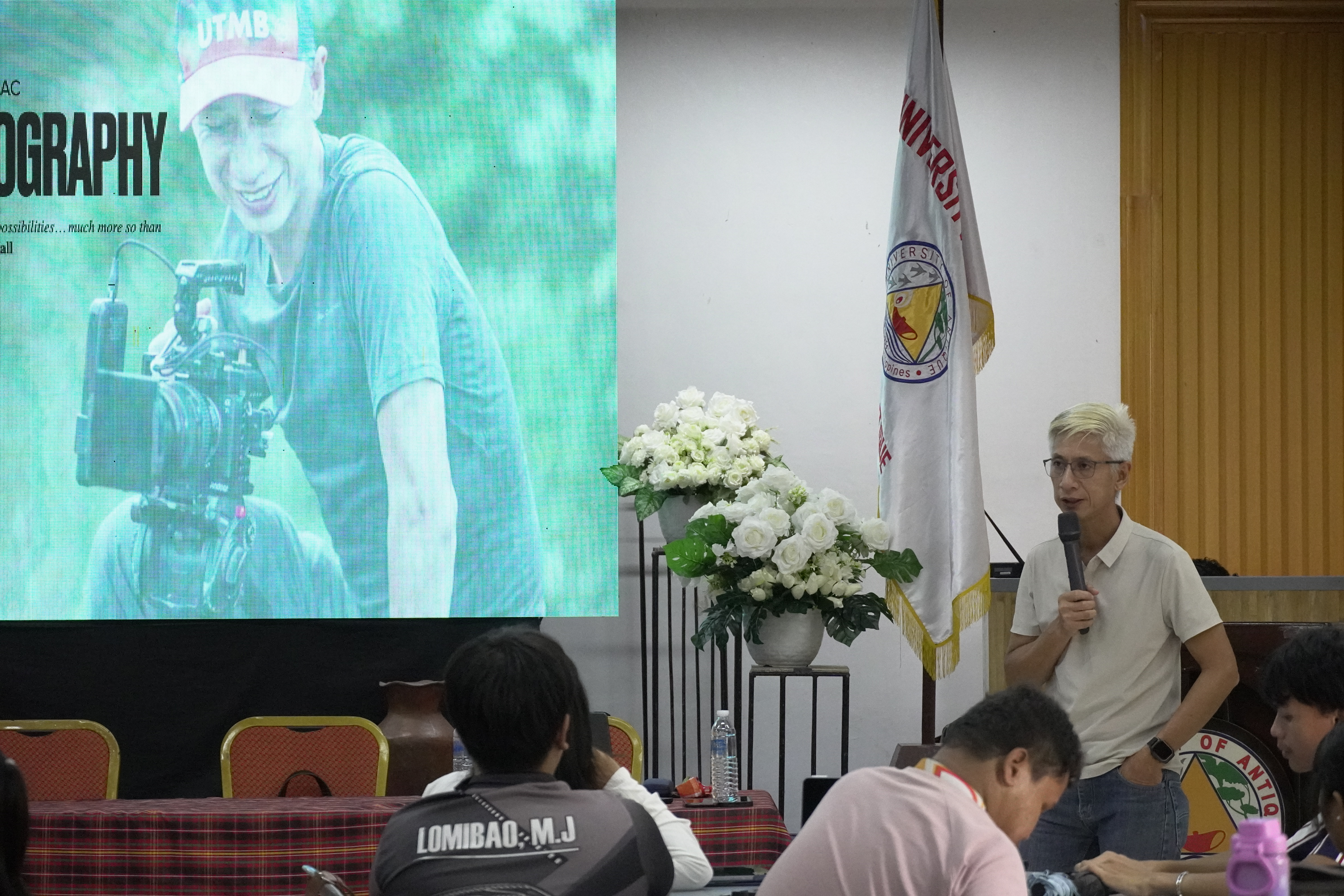
Photo credits: 7DayAdventures: Collective and Feria Snap Shot.